-

An Overview of Perusall
Overview Perusall is a free “social annotation” tool that helps students engage with course material in class groups. When integrated with HuskyCT, instructors can create reading or viewing assignments in which students create & share their own annotations and respond to each other’s comments and questions. Perusall informs instructors of the concepts that generate the […]
-
An Overview of VoiceThread
Overview VoiceThread is an interactive, multimedia discussion tool that enables dynamic conversations around multimedia content including images, videos, documents, and presentations. It allows users (instructors & students) to create, share, and comment on content using a variety of formats, including text, audio, and video. Online instructors can leverage VoiceThread to create asynchronous discussions, deliver interactive lectures, […]
-

Analysis: Planning Your Instruction
Overview Analysis is the first step in planning effective instruction, and the first phase of the instructional design model ADDIE. It involves collecting all the information that may impact a course in order to make informed course design decisions. The process begins by addressing a series of questions.
-

Authentication of Students in Online Courses
Overview The purpose of this article is to guide the University community as faculty seek methods of verifying student identity in distance learning and online courses. These guidelines were designed to meet NECHE accreditation standard 4.48 and federal requirements under Sec. 602.17(g)of the Higher Education Act of 1965. Additionally, these guidelines are designed to meet […]
-

Best Practices and Expectations for Online Teaching at UConn
Overview Teaching in an online environment is different from teaching in a face-to-face classroom. This post covers some best practices and expectations for online teaching at UConn.
-

Collaborative (Group) Learning Online
Overview Collaborative learning, also known as group learning, is an opportunity for students to develop higher-order cognitive skills, promote connections and community, and engage with different perspectives. To facilitate student collaboration online, it requires designing the activity as well as selecting the best technology to connect students.
-

Communication Templates for Online Courses
Overview Communication with students is a key part of Managing Your Online Course; this post has email and announcement templates and examples to aid with that communication.
-

Communication with Online Students Prior to Classes
Overview To prepare online enrolled students for success, eCampus provides them with information prior to the start date of classes.
-

Competencies for Online and Hybrid/Blended Instruction
Overview What skills does an instructor need to succeed with an online or hybrid course? The UConn Competencies for Online and Hybrid/Blended Instruction survey includes 27 competencies to inform and facilitate self-assessment. The second edition takes into account developments in higher education since the COVID pandemic.
-

Copyright in Online Courses: Using Free Content Legally
Overview This article provides an overview of common concepts related to copyright in online courses and shares best practices for finding and using free educational materials.
-

Creating & Managing Videos for Online Teaching & Learning
Overview Videos are gaining ground in online education as a result of their versatility in promoting learning, satisfaction, engagement, and interest (LSEI; Costley & Lange, 2017). With this fast-growing dependence on videos, online educators need to become mindful of what constitutes quality videos and how they are best integrated into online content delivery and interaction.
-

Deciding on Instructional Materials
Overview This article provides instructional material alternatives, with examples, for use in online, hybrid, and in-person courses. Three options will be considered. Should you “make”, “buy” or look for “free” materials that support your learning objectives?
-

Design: Using a Course Design Plan
Overview This article introduces using a course design plan for the design phase of the instructional design model ADDIE (Analysis, Design, Develop, Implement and Evaluate) and how it can help meet alignment principles of Quality Matters’ Standards for Course Design.
-

Designing & Developing Online Assessments
Overview This article describes research-based recommendations for designing, developing, and implementing assessments in online courses.
-

Developing Engaging Online Discussions
Overview Online discussions are used to build dynamic learning communities, to synthesize key concepts and to promote critical thinking skills. In this article, we discuss tips for writing engaging prompts.
-

eCampus Accessibility Checklist and Guide
Overview This post provides a guide to implementing the eCampus Accessibility Checklist, including disabilities and common barriers, accessibility frameworks, rationale for accessibility standards, and resources for implementation.
-

Effective Communication in Online Courses
Overview Asynchronous communication in online courses takes place via a variety of tools, such as announcements, rubrics, email, discussions, audio feedback, video feedback, etc. The learning benefits of regular communication with students in an online course are often overlooked by faculty. Effective and regular messaging is essential for an inclusive, motivated and engaged learning community. […]
-

Ensuring Academic Integrity Online
Overview Faculty can use the strategies, tools, techniques and technologies available to them to help ensure academic integrity in online courses.
-

Evaluating Teaching and Course Design Using Surveys
Overview This post provides recommendations for collecting formative and summative student survey feedback to inform and improve your teaching and course design.
-
Facilitating Online Discussions
Overview Online discussions are used to build dynamic learning communities, to synthesize key concepts, and to promote critical thinking skills. This article highlights tips for successfully facilitating online discussions.
-
Faculty Resources for Teaching Online at UConn
Overview This post is a resource for faculty teaching online graduate and certificate programs as well as the various staff and administrators who support these programs. It is intended to provide information and guidance around roles and procedures that will help faculty be most effective in preparing to design, develop, and teach online.
-

FAQs About Videos for Online Teaching & Learning
Overview This post is a collection of Frequently Asked Questions (FAQs) pertaining to creating videos for online courses.
-
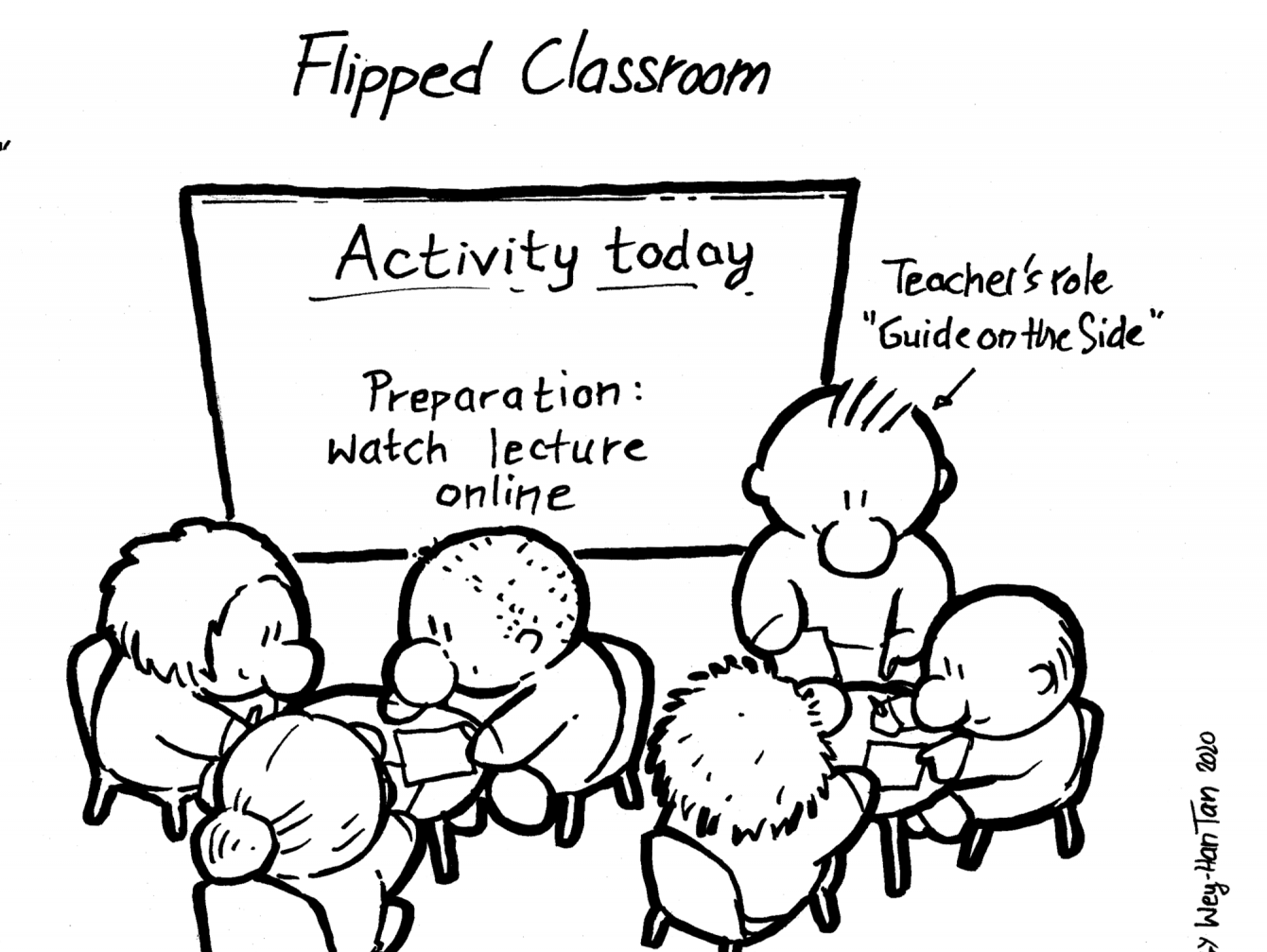
Flipped Classroom Methods
Overview The purpose of this article is to share flipped classroom methods to leverage your existing course materials and to integrate these materials, along with any new materials, into an effective teaching and learning strategy.
-
Frequently asked questions about accommodations during online teaching
Q: I received an accommodation letter from the Center for Students with Disabilities (CSD), how are accommodations coordinated in my class now that it is in an online or hybrid format? A: CSD is available to discuss any concerns you may have about the implementation of approved accommodations in any learning environment. If you have […]
-

Guest Access to HuskyCT Courses through NetID Account Sponsorship
Overview Individuals without an official UConn NetID may be granted HuskyCT guest access through NetID account sponsorship.
-
How Rubrics Help Faculty and Students
Overview This article explains rubrics, types of rubrics, outlines how rubrics may benefit both faculty and students, and provides a few HuskyCT example rubrics.
-

Inclusive Online Course Design & Facilitation
Overview This article provides practical tips and resources for incorporating more inclusive design strategies into online courses.
-
Introducing Quality Matters
Overview This article provides information about Quality Matters and the Higher Education Rubric Standards.
-

Key Takeaways from the CETL Online Student Preferences Survey
Overview In late 2022, eCampus launched a survey to determine student preferences as related to online courses. The survey went out to all students who completed an eCampus online course, which includes both undergraduate (68%) and graduate (32%) students. The survey was sent to 7300 students and 665 responded (9%).
-

Managing Your Online Course
Overview The Course Facilitation Plan (CFP) outlines the key steps to take before, during, and after your course implementation, presented in the recurring course life-cycle, as well as recognizing the four roles of an online instructor. Download a copy of the file to create your own customized version.
-

Meeting Regular and Substantive Interaction (RSI) Requirements
Overview This article provides examples for meeting the federal requirement for online or distance learning courses to “support regular and substantive interaction (RSI) between the students and the instructor, synchronously or asynchronously” (Downs, 2021).
-
Modality Specific Pedagogy
Hybrid/Blended Design Hybrid/blended learning is a combination of face-to-face instruction with additional online or distance learning techniques with the goal of mixing learning techniques to effectively teach the content and meet the learning needs of students. Student benefits: Greater flexibility in scheduling; Ability to track learning; and Encourages ownership of learning. Instructor benefits: Ability to […]
-
Online Proctoring with ProctorU
Overview ProctorU is a service used to authenticate a user’s identity and provide live proctoring of online assessments. Test-takers use ProctorU’s Guardian Browser, which enhances exam security by preventing the user from accessing unauthorized resources and functions on their computer. ProctorU uses a multi-step process to establish a user’s identity: a live proctor sees the […]
-
Performing a Quality Matters Self-Review
Overview As a subscribing Quality Matters (QM) institution, UConn encourages faculty to perform (at minimum) an “unofficial” QM Self-Review of their online and blended courses. This article details the steps for completing a QM “unofficial” Self-Review and where to seek further information and assistance.
-

Proctoring Options for Online Exams
Overview Maintaining academic integrity in all UConn courses is important. Key concerns include: To help faculty administer online exams securely and effectively, UConn provides several proctoring solutions varying in level of monitoring, automation, reporting, integration, and recommended use case.
-
Promoting Student Engagement in Your Online Course
Last revised on 7/25/2025 by KK Student engagement is essential to effective teaching, but it can feel more elusive in online environments. Instructors often wonder how to foster interaction, ensure students engage with course materials and build a vibrant learning community. This article provides practical, actionable strategies for increasing student engagement in online courses. Student […]
-
Re-offering Your Online Course
Overview This post reviews the steps needed to re-offer a previously taught online course, including obtaining, restoring, and resetting the HuskyCT/Blackboard course site.
-

Self-Guided Course Design and Development
Overview This post guides UConn faculty in designing, building, and teaching online and hybrid courses. Please see UConn Registrar’s Course Modalities for a complete explanation of each instructional approach. The phases outlined are intended for faculty with a strong background in teaching and pedagogy who are already comfortable using HuskyCT. To learn more about the skills and […]
-

Specifications Grading: A Method to Improve Student Performance
Overview Are you looking to increase student motivation and the quality of their academic work? If yes, consider specifications grading. According to Linda B. Nilson, Ph.D., the traditional higher education grading method is broken and specifications grading offers a solution with benefits for both students and faculty. Nilson published her seminal work, Specifications Grading: Restoring […]
-

Syllabus Template for Online Courses
Overview eCampus offers a syllabus template for instructors teaching online, which meets accessibility requirements for online courses. This post describes how to download and use the template to create your syllabus.
-

Tips for Conducting Online / Remote Synchronous Sessions
Overview Conducting remote live, remote, synchronous class sessions using video conference software — such as WebEx, Teams, or Collaborate Ultra — can be a daunting task (Boland & Major, 2021). Below are some tips and strategies for designing and facilitating online synchronous sessions, specifically in Online Synchronous (OS), Online Blended (OB), and In-Person Remote (PR) […]
-

Types of Videos for Online Teaching & Learning
Overview Videos can be used for a variety of purposes in online courses, and different set-ups are required to achieve these goals. This article will review the types of videos used in online courses and provide examples.
-

University Modes of Instruction
Overview This post covers UConn’s course modalities and related policies for faculty teaching online.
-

Using a Token Economy to Promote Equity & Learning
Overview A token economy or late bank system allows instructors to provide deadline flexibility to students, eliminating the need for instructors to adjudicate excuses. This type of structure flexibility enhances student learning, reduces stress, and promotes equity.
-

Using Data to Inform Online Teaching
Overview HuskyCT (Blackboard) offers a range of analytics tools to monitor and enhance student progress. These tools provide insight in relation to student engagement, assignment completion, and overall course performance, enabling faculty to make data-driven decisions. Comprehending and leveraging these features allows instructors to identify trends, address potential issues, and create a supportive learning environment […]
-

Using Student Preview as You Teach: What Do My Students See?
Overview The Student Preview feature in HuskyCT (Blackboard) allows instructors to experience their course exactly as a student would.
-

Using the eCampus HuskyCT Template
Overview The eCampus HuskyCT template is an organized and student-friendly structure which can be copied into another HuskyCT site. The template requires editing and basic building skills in HuskyCT (Ultra Course View). Refer to the resources listed within this article for assistance with various aspects of HuskyCT. Before building a course in HuskyCT, complete a […]
-
Writing Effective Multiple Choice Questions
Overview This post provides guidelines for constructing multiple choice assessment questions. While multiple choice questions can be used to measure a number of different learning outcomes, the validity of these assessments is greatly influenced by how well the questions are constructed. Use this guide to write multiple choice questions for both lower and higher level […]
-
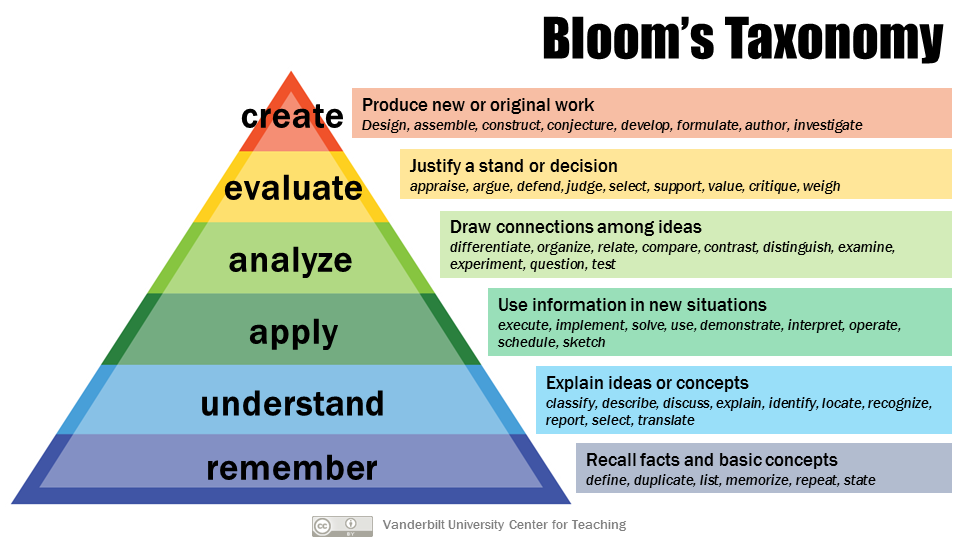
Writing Learning Objectives
Overview Objectives explain the destination of the learning experience to students. When written well and aligned with other course elements, objectives help students make cognitive connections between materials, learning activities and assessments. This alignment increases the possibility of learning success and enables both the students and the instructor to stay focused and monitor learning.